
During the daily operation, shutdown maintenance, and repair of industrial kilns, the backup insulation layer must not only provide good thermal insulation performance, but also withstand the combined effects of cutting, handling, installation, vibration, thermal cycling, and long-term high-temperature service.
Therefore, for ceramic fiber blankets used in kiln backup lining repair and maintenance, strength is not simply a technical parameter. It is an important factor that affects installation quality, lining stability, and service life.
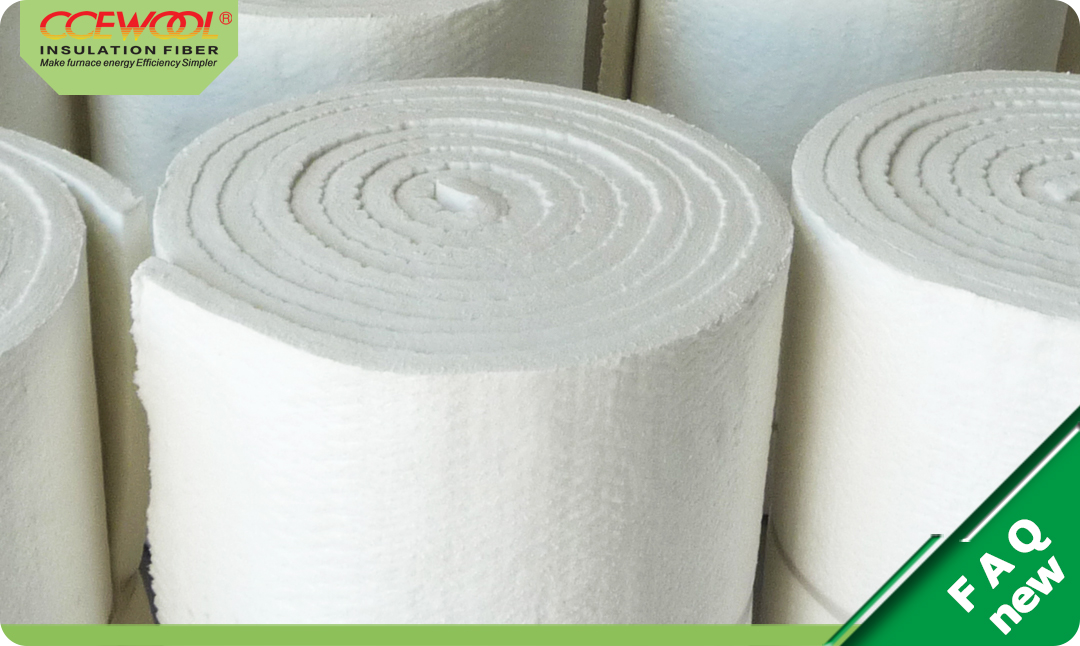
Why Is the Tensile Strength of Ceramic Fiber Blanket Important?
When selecting ceramic fiber blankets, many customers usually focus first on service temperature, thermal conductivity, and density. However, in actual installation and long-term operation, tensile strength is also very important.
The strength of a ceramic fiber blanket reflects the ability of the fiber structure to maintain its integrity under external force. A ceramic fiber blanket with higher tensile strength is less likely to tear, delaminate, loosen, or deform locally during installation, maintenance, and long-term service.
CCEWOOL® Ceramic Fiber Blanket: High Tensile Strength to Reduce Tearing During Installation
During kiln maintenance, ceramic fiber blanket often needs to be cut, bent, laid, and installed around anchors, steel structures, or irregular furnace surfaces. These operations create tensile force, friction, and local stress on the blanket.
If the blanket does not have sufficient strength, local tearing, edge damage, or fiber separation may occur during installation, affecting the continuity and installation quality of the backup insulation layer.
CCEWOOL® Ceramic Fiber Blanket has a tensile strength of over 85 KPa, helping achieve:
Better tear resistance
More stable installation integrity
Easier adaptation to complex kiln structures
Less installation damage and fewer later repairs
This is especially important for kiln maintenance projects with short shutdown periods and high requirements for installation efficiency.
Double-Sided Inner Needling Process Enhances the Overall Tensile Strength of Ceramic Fiber Blanket
The tensile strength of ceramic fiber blanket is not determined by a single parameter. It is closely related to fiber length, fiber-forming uniformity, shot content control, and needling structure.
CCEWOOL® Ceramic Fiber Blanket adopts a stable fiber-forming process and low shot content control, resulting in a more uniform fiber distribution. Through an optimized double-sided inner needling process, the fibers form a tighter interlocking structure in the thickness direction.
Compared with ordinary surface-needled products or blankets with insufficient fiber bonding, the double-sided inner needling structure can strengthen the bonding between fiber layers and reduce delamination, loosening, and edge fiber shedding during cutting, handling, bending, and installation.
During kiln backup lining repair and maintenance, ceramic fiber blanket often needs to be installed around anchors, steel structure edges, or irregular furnace surfaces. In these conditions, the blanket is subjected not only to tensile force, but also to local friction and bending stress. A more stable needling structure helps the blanket maintain better integrity during these operations, reducing the risk of tearing and installation damage.
At the same time, the double-sided inner needling process also helps improve the resilience and thickness stability of the ceramic fiber blanket, allowing the product to recover better after compression and reducing loosening, collapse, and fiber shedding during long-term use. For kiln backup insulation layers that must withstand thermal cycling, equipment vibration, and high-temperature gas flow over long periods, this structural stability helps maintain a more continuous insulation layer and improve the long-term reliability of the backup system.
Therefore, CCEWOOL® Ceramic Fiber Blanket does not only meet conventional temperature resistance and insulation requirements. Through stable fiber forming, low shot content control, and a double-sided inner needling process, it improves blanket tensile strength, interlayer bonding, and installation integrity, making it more suitable for industrial kiln backup lining repair, maintenance, and long-term high-temperature operation.
The Value of CCEWOOL® Ceramic Fiber Blanket for Kiln Maintenance
For industrial users who need a stable ceramic fiber blanket insulation solution, higher strength means more reliable performance and a longer maintenance cycle.
The performance of ceramic fiber blanket should not be evaluated only by service temperature and thermal conductivity.
For kiln backup lining repair and maintenance projects, strength directly affects installation quality, backup lining stability, vibration resistance, resistance to gas flow erosion, and long-term service life.
Choosing a high-strength ceramic fiber blanket means choosing an insulation product that is better suited for long-term industrial operating environments.
In kiln backup insulation systems that require thermal insulation performance, installation efficiency, and maintenance reliability, CCEWOOL® Ceramic Fiber Blanket can provide customers with a more stable and reliable high-temperature insulation solution.
Post time: Jul-09-2026
