
Car bottom furnaces are widely used for annealing, stress relieving, forging preheating, aluminum processing, and heat treatment of large workpieces. Depending on process requirements, operating temperatures typically range from 250°F to 2460°F (120°C–1350°C).
Compared with many small and medium-sized industrial furnaces, car bottom furnaces are characterized by large chamber volume, heavy loading capacity, and long heating cycles. For this type of equipment, the lining must not only withstand high temperatures, but also control heat loss, maintain structural stability, and reduce long-term maintenance costs.
Therefore, the key to car bottom furnace lining design is not simply selecting higher-grade products, but configuring materials according to the working conditions of different furnace zones.
From a structural perspective, a car bottom furnace usually includes the roof, side walls, furnace door, car structure, and expansion compensation areas. Each zone serves a different function, which also determines different product selection logic.
Based on this, CCEWOOL® believes that the key to optimizing a car bottom furnace is not replacing everything with a single product, but establishing a more suitable refractory and insulation combination for each structural area.
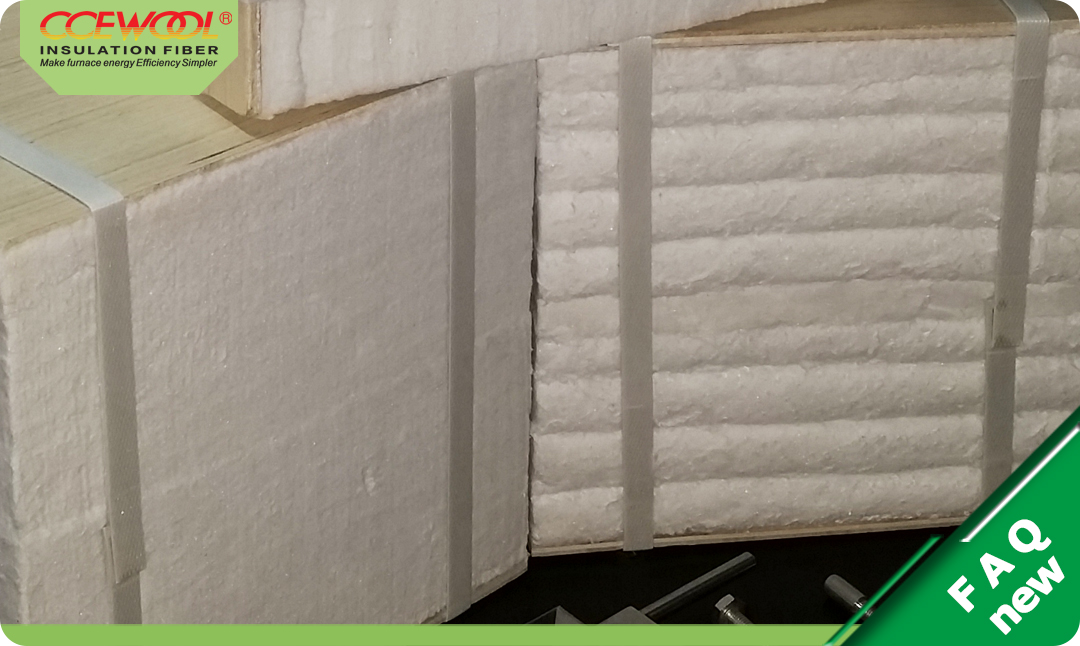
Why Car Bottom Furnaces Require Zoned Design
Different areas of a car bottom furnace operate under different conditions.
The roof has a large surface area and is highly sensitive to weight and heat storage. The side walls continuously affect shell temperature and heat loss. The furnace door opens and closes frequently, requiring reliable sealing performance. The car structure must support the weight of the workpieces while reducing downward heat loss. Expansion joints and special connection areas must continuously accommodate thermal expansion and structural movement.
Therefore, furnace optimization is not about simply increasing the thickness of one material. Instead, it requires balancing insulation, load-bearing capacity, sealing performance, and structural stability according to the function of each zone.
Furnace Roof
A Key Area for Lower Heat Storage and Faster Thermal Response
The roof is often one of the first areas in a car bottom furnace to adopt ceramic fiber structures.
Although traditional dense refractory materials can meet refractory requirements, they are heavy and have high heat storage. During each heat-up cycle, not only the workpieces but also the roof structure itself must be repeatedly heated. Over repeated production cycles, this heat consumption continues to accumulate.
As a result, more car bottom furnaces are adopting CCEWOOL® Ceramic Fiber Modules, Low Biopersistent Fiber Modules, or PCW Modules. Compared with traditional dense lining structures, fiber modules help reduce roof weight and heat storage, improving furnace thermal response. This is especially valuable for intermittently operated car bottom furnaces.
Furnace Walls
Continuously Affecting Heat Loss and Shell Temperature
Many engineers focus on the roof but may overlook continuous heat transfer through the furnace walls. In practice, wall insulation performance continuously affects shell temperature and equipment energy consumption.
For this reason, modern car bottom furnace walls often use a combined structure of hot-face materials and back-up insulation layers. CCEWOOL® Ceramic Fiber Blanket and CCEWOOL® 1900°F Back-Up Board are commonly used in back-up insulation areas to reduce heat transfer toward the steel shell.
For industrial furnaces operating over long periods, wall heat loss may not always be directly visible, but it continuously affects overall thermal efficiency.
Furnace Door
One of the Most Common Heat Leakage Areas
The furnace door is one of the most frequently moving parts of a car bottom furnace. Long-term opening and closing, combined with thermal cycling, can cause seal wear, joint movement, and localized heat leakage.
Therefore, the design focus for the furnace door is often not temperature resistance alone, but sealing reliability.
CCEWOOL® Ceramic Fiber Board, Ceramic Fiber Blanket, and Ceramic Fiber Rope are commonly used for furnace door insulation and sealing structures. Flexible fiber products can better accommodate changes caused by thermal expansion and mechanical movement, helping maintain sealing continuity around the door area.
Car Structure
Load-Bearing and Insulation Must Be Considered Together
The car structure is different from the roof and side walls because it must carry the weight of the workpieces. For this reason, this area rarely uses a single fiber structure and usually adopts a multilayer composite design.
The hot-face area provides load-bearing support, while the back side is configured with insulating fire bricks and ceramic fiber boards as the insulation layer.
The combination of CCEFIRE® Insulating Fire Brick and CCEWOOL® Ceramic Fiber Board helps maintain structural strength while reducing heat transfer to the car’s steel structure. This type of design is common in heat treatment projects for large forgings, castings, and heavy mechanical components.
Expansion Areas
Small in Size but Important for Lining Life
These areas continuously experience thermal expansion and movement as temperatures change. Without sufficient compensation space, internal stress can accumulate in the lining and eventually lead to cracking or structural damage.
CCEWOOL® Ceramic Fiber Blanket, Ceramic Fiber Bulk, and custom-shaped fiber components are often used in these areas to absorb thermal expansion and maintain lining integrity.
Although these areas are limited in size, they can directly affect maintenance frequency and lining service life.
The Key Is Not Full-Fiber Construction, but Proper Material Division
From an engineering perspective, the key to optimizing a car bottom furnace is not replacing the entire lining with ceramic fiber block. Instead, materials should be configured according to the operating conditions of each zone:
Roof: reduce weight and heat storage to improve thermal response.
Walls: control heat loss and shell temperature.
Door: strengthen sealing performance and reduce heat leakage.
Car structure: balance load-bearing and insulation requirements.
Expansion areas: absorb thermal movement and maintain lining integrity.
This zoned design approach allows different products to perform where they are most suitable, helping balance energy consumption, operating efficiency, maintenance intervals, and structural stability.
For large heat treatment equipment such as car bottom furnaces, the real value does not come from a single product alone, but from whether the product matches the structure and working conditions of each furnace zone.
Only a lining design based on this logic can deliver more stable and efficient performance during long-term operation.
Post time: Jun-08-2026
