
In hot blast stoves, insulating bricks operate continuously at 1200–1400°C (2192–2552°F) while being exposed to high-velocity hot gases, repeated thermal cycling, dust erosion, and periodic reducing atmospheres containing CO and H₂.This is a typical high-temperature composite stress environment. Traditional insulating bricks with high impurity content often experience:
-
Softening and deformation due to excessive glassy phase formation at high temperatures
-
Mullite degradation leading to a weakened and brittle microstructure
-
Iron-based impurities undergoing reduction and powdering, causing loss of strength
All these failure modes point to one root cause: excessive impurities.
CCEWOOL® mullite insulation brick improves long-term brick stability under extreme conditions by strictly controlling raw material purity and stabilizing the crystal phase structure, achieving impurity levels far below the industry average.
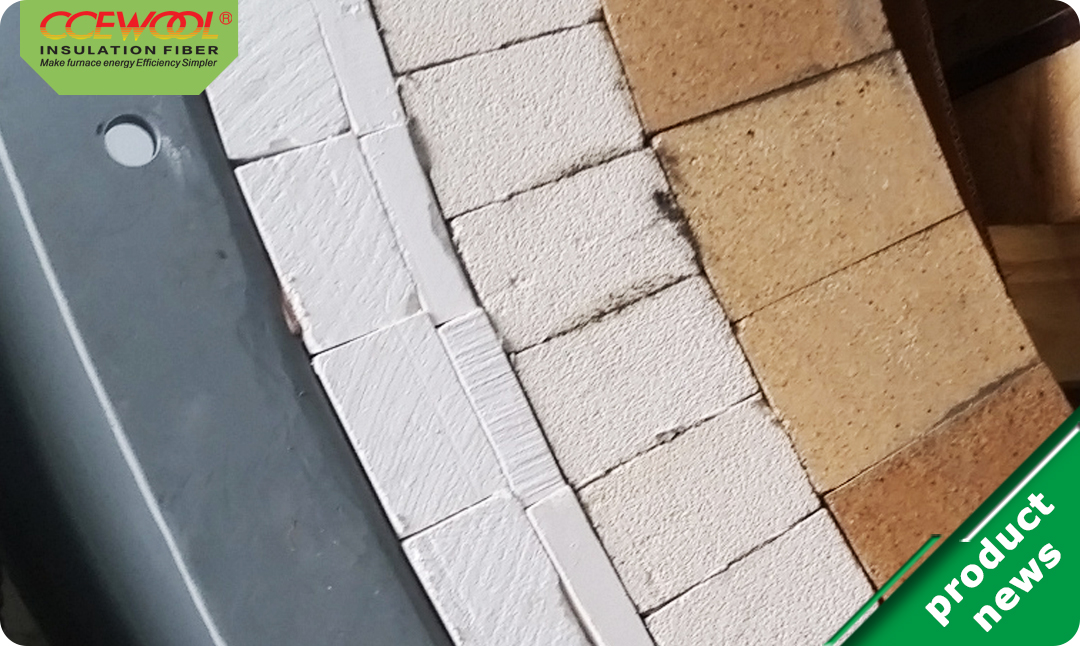
How does CCEWOOL® enhance hot blast stove lining stability by reducing impurity content?
Raw Material Purity Control: A Low-Impurity System that Builds a More Stable High-Temperature Framework
CCEWOOL® mullite insulation brick uses high-purity raw materials sourced from its own mineral deposits and strictly limits low-melting impurities such as Fe₂O₃, K₂O, and Na₂O. Automated pre-screening removes iron particles and clay dust, ensuring a cleaner melt and a more stable crystal phase after sintering.
A low-impurity system directly enhances high-temperature performance:
-
Reduced glassy phase formation – bricks remain rigid at 1200–1400°C without premature softening or collapse
-
Suppression of undesirable crystal reactions – the mullite skeleton retains higher continuity, and pore walls do not coarsen or interconnect
-
Long-term pore stability – pore walls resist shrinkage or cracking during thermal cycling, keeping thermal conductivity stable
With this high-purity and low-impurity formulation, CCEWOOL® mullite insulation brick exhibit superior refractoriness and structural stability in the harsh operating conditions of hot blast stoves.
Precision Firing: Minimizing Impurity Effects Through Controlled Sintering
CCEWOOL® mullite insulation brick are fired in an 88-meter fully automated tunnel kiln, which ensures a stable and uniform thermal field. This prevents under-firing or over-firing and allows low-melting impurities to fully react or volatilize during the 1200–1350°C sintering process, resulting in a dense and stable mullite structure.
Based on this low-impurity system, CCEWOOL® mullite insulation brick offer key performance advantages:
-
Fewer pores and no high-temperature softening, ensuring shape stability
-
A more continuous mullite skeleton, improving resistance to thermal shock
-
Pore walls that do not shrink or collapse, maintaining thickness and mechanical integrity
As a result, the bricks achieve lower linear shrinkage, higher compressive strength, and superior thermal shock stability, preventing powdering or cracking during long-term service and providing a more reliable lining structure.
With ultra-low impurity content, CCEWOOL® mullite insulation brick maintain structural stability under high temperatures, thermal shock, and reducing atmospheres. They resist softening and powdering while preserving long-term thermal performance.This is why CCEWOOL® mullite insulation brick deliver higher reliability and longer service life in hot blast stove applications.
Post time: Dec-10-2025
