
In the high-temperature zone of walking-beam reheating furnaces (1100–1250°C / 2012–2282°F), insulating fire bricks operate under continuous heavy load from steel billets, mechanical impact during beam movement, bed-load pressure, intense flame impingement, and frequent thermal cycling. These areas experience severe thermal-fatigue conditions, where conventional insulating bricks commonly suffer:
-
Crushing and powdering at high temperature: the micro-skeleton collapses under load.
-
Bottom deformation and sinking: caused by high-temperature creep.
-
Pore coarsening and interconnection: forming “thermal channels” that rapidly increase heat loss.
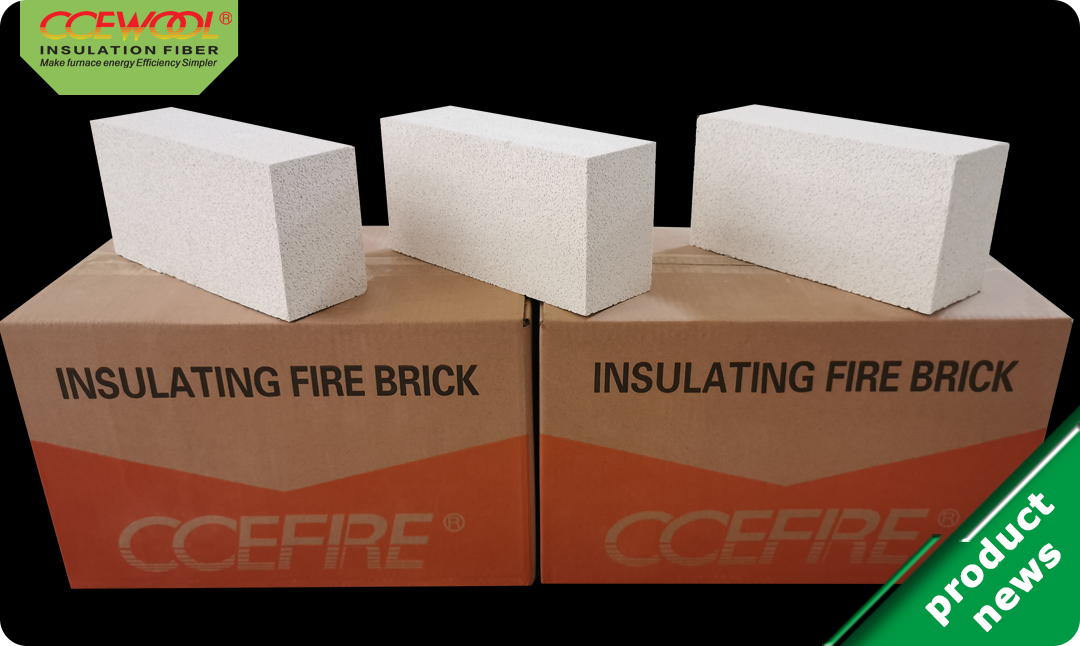
CCEWOOL® thermal insulating brick improves compressive stability and reduces deformation by optimizing four key aspects: raw-material purity, pore-structure design, high-temperature sintering, and digital quality control.
High-purity raw materials create a stronger load-bearing framework
CCEWOOL® thermal insulating brick strictly controls Fe₂O₃ to ≤0.7%, which directly enhances the high-temperature structural stability of the brick.
Benefits:
-
Minimizes low-melting glass phases that cause softening or embrittlement at 900–1200°C.
-
Ensures more stable crystalline phases that resist softening under furnace conditions.
-
Preserves the integrity of the micro-skeleton, preventing crushing and cracking under long-term load.
This purity-driven framework is a core reason why CCEWOOL® thermal insulating brick deliver superior compressive strength in walking-beam furnaces.
Precisely engineered pore structure improves load-carrying performance
CCEWOOL® uses controlled foaming to create a fine, uniform, closed-cell pore system.
Advantages:
-
Smaller pores reduce stress concentration, lowering the risk of local collapse.
-
Uniform pore distribution avoids weak zones, improving overall compressive stability.
Compared with traditional bricks containing coarse or interconnected pores, CCEWOOL® thermal insulating brick resist crushing, deformation, and creep far more effectively under extreme furnace loads.
High-temperature tunnel-kiln sintering forms a denser, more stable skeleton
CCEWOOL® thermal insulating brick are fired in an 88-meter fully automated tunnel kiln, ensuring a stable thermal field and precise temperature control throughout heating, soaking, and cooling.
Results:
-
Cell-wall structures are fully sintered, maintaining rigidity at 1100–1250°C.
-
The micro-framework becomes denser and more continuous, significantly reducing high-temperature creep.
-
Furnace bottoms remain flatter, more stable, and less prone to long-term deformation.
CCEWOOL® thermal insulating brick maintain a rigid, creep-resistant load-bearing skeleton at high temperatures, they resist softening, collapsing, and long-term deformation. This structural stability enables CCEWOOL®
thermal insulating brick to deliver higher compressive strength, lower deformation rates, and longer service life in the demanding thermal-fatigue environment of walking-beam furnaces.
Post time: Dec-05-2025
