
Pusher-type continuous reheating furnaces are widely used in steel rolling, forging, and heat treatment processes. Their typical characteristics include long continuous operating cycles, clearly defined temperature zones, and highly concentrated thermal loads. Furnace operating temperatures usually range from 1100–1300 °C, placing high demands on lining systems in terms of thermal insulation efficiency, structural stability, and maintenance controllability.
With the advancement of furnace lining technologies, thermal ceramics modules have become an important lining solution for pusher-type continuous reheating furnaces due to their lightweight structure, high insulation efficiency, and installation convenience.
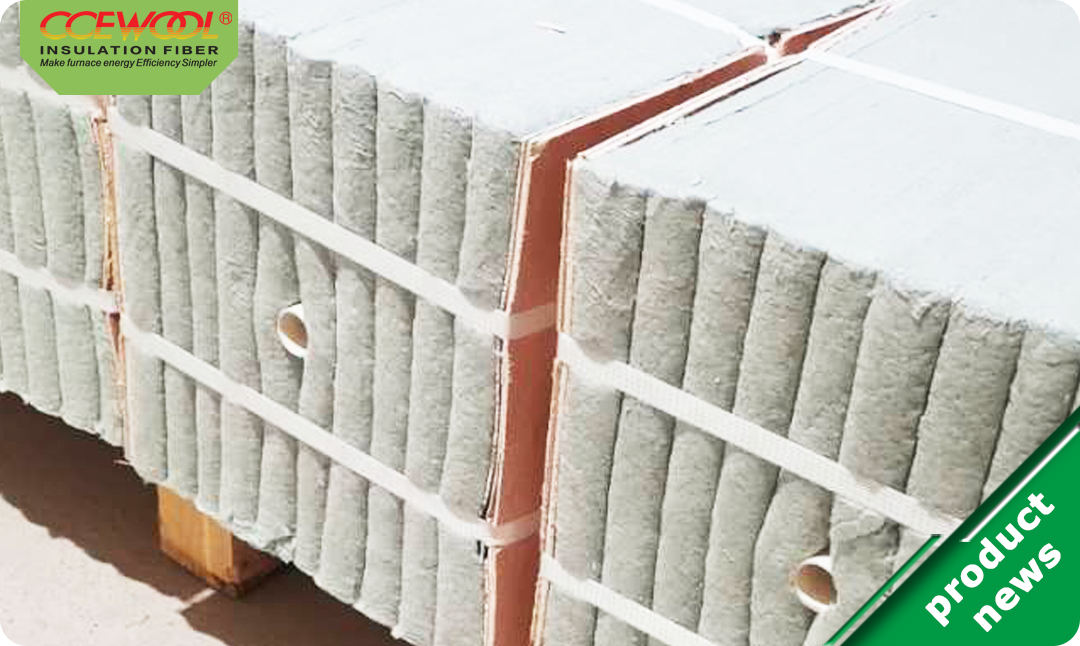
Application Requirements of Thermal Ceramics Modules Under Furnace Operating Conditions
Pusher-type continuous reheating furnaces operate under sustained high-temperature and high-heat-load conditions. Distinct temperature zones exist inside the furnace, while continuous billet pushing and furnace gas flow impose additional mechanical and thermal disturbances.
The maximum operating temperature of the furnace typically reaches 1150–1250 °C, with localized hot-face temperatures approaching 1300 °C. Under such conditions, the selection and application of thermal ceramics modules must be tailored to the thermal and structural characteristics of each furnace zone, rather than relying on a single temperature grade or uniform lining configuration.
Preheating Zone: Balancing Insulation Efficiency and Lightweight Design
▶Preheating Zone
The preheating zone generally operates within a temperature range of 850–950 °C. Although the local temperature is relatively lower, the extended furnace length makes this zone a critical contributor to overall thermal efficiency.
In this area, CCEWOOL® 1260 °C thermal ceramics modules are used as the primary lining, combined with CCEWOOL® 1260 °C ceramic fiber blankets as a backup insulation layer to form a lightweight, multi-layer insulation system.
The compression and resilience of the modules during installation create a continuous and tightly sealed insulation layer, effectively reducing shell temperature while lowering overall furnace weight, providing a stable thermal foundation for downstream high-temperature zones.
Heating Zone: Addressing High Temperature and High Heat Flux
▶Heating Zone
The heating zone represents the highest-temperature and highest-heat-load section of the pusher-type furnace, with operating temperatures reaching approximately 1350 °C and elevated local heat flux.
In this zone, CCEWOOL® 1430 °C thermal ceramics modules are selected to meet the requirements for heat resistance and structural stability under extreme thermal conditions.
Beyond insulation, the flexible structure of thermal ceramics modules helps absorb thermal stress fluctuations during prolonged operation, reducing overall thermal inertia and contributing to improved long-term lining reliability.
Soaking Zone: Emphasizing Long-Term Thermal Stability
▶Soaking Zone
The soaking zone typically operates at 1250–1300 °C with relatively stable temperatures but extended continuous operating time, requiring superior long-term lining stability.
For this zone, thermal ceramics modules manufactured from CCEWOOL® PUREWOOL ceramic fiber blankets are recommended. Their ultra-low linear shrinkage and low thermal conductivity effectively reduce furnace shell temperature and energy consumption, while maintaining stable insulation performance during prolonged high-temperature service.
Furnace Roof Area: Anchoring Design and Long-Term Deformation Control
▶Furnace Roof Area
In pusher-type continuous reheating furnaces, the roof area is commonly lined with CCEWOOL® 1260 °C thermal ceramics modules.
This section requires careful consideration of module self-weight, suspension methods, and the risk of long-term sagging under sustained high-temperature exposure. As a result, higher standards are imposed on anchor strength, durability, and overall structural design. Proper anchoring layout and structural engineering are critical to ensuring long-term roof lining stability.
In pusher-type continuous reheating furnaces, thermal ceramics modules play a vital role in achieving lightweight lining systems, high insulation efficiency, and structural optimization.
Only by selecting appropriate module grades for different temperature zones and structural positions—and by combining thermal ceramics modules with ceramic fiber blankets and related insulation products—can long-term performance requirements for insulation efficiency, structural integrity, and maintenance control be met. This approach allows thermal ceramics modules to fully realize their engineering value in continuous reheating furnace applications.
Post time: Feb-26-2026
