
A hot blast stove is an important high-temperature unit in the blast furnace ironmaking system, used to preheat the combustion air supplied to the blast furnace. High-temperature flue gas first transfers and stores heat in the checker bricks. During the subsequent blowing cycle, cold air is heated to approximately 2000–2400°F (1090–1315°C) and then delivered to the blast furnace through the hot blast outlet, hot blast main, and bustle pipe.
Because there are significant differences in temperature and structural conditions from the dome and combustion chamber to the checker chamber and hot blast delivery system, the insulation design of a hot blast stove normally requires a zoned material configuration.
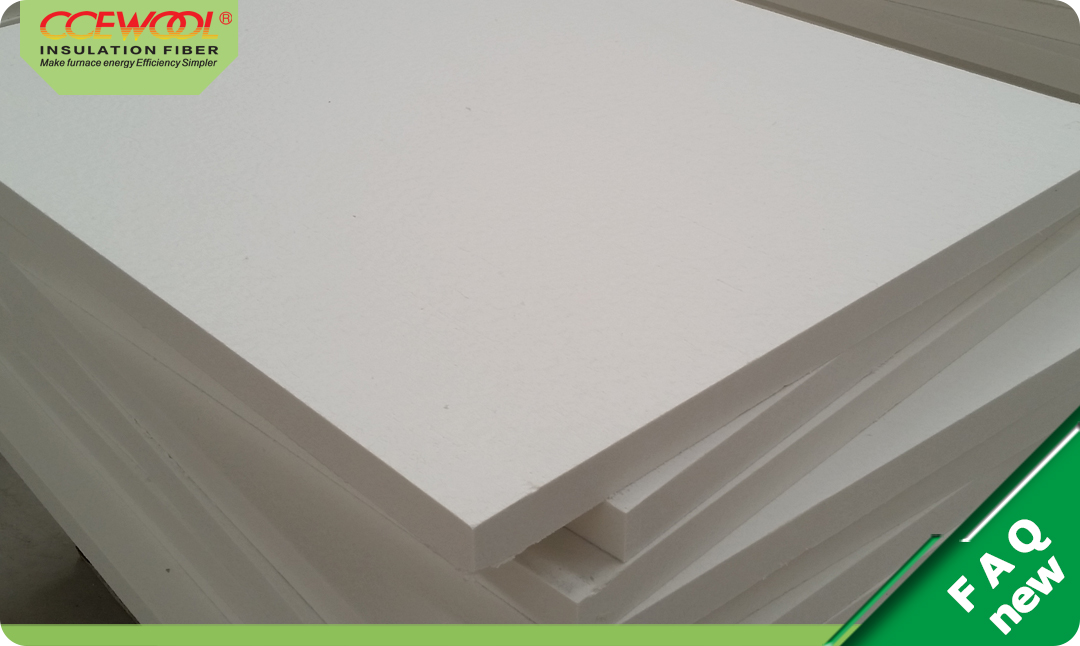
CCEWOOL® Ceramic Fiber Board is mainly installed behind the refractory hot-face lining, with different temperature grades selected according to the actual operating conditions of each area. Its value lies not only in reducing heat transfer toward the steel shell, but also in using different temperature grades, thicknesses, and Fabrication options to better match the structural and thermal insulation requirements of different hot blast stove zones.
Dome: High-Temperature Grade and Curved Structure Adaptability
The dome is one of the high-temperature areas inside a hot blast stove. Dome temperatures can typically reach approximately 1250–1400°C and may be even higher in systems designed for higher blast temperatures.
This area is exposed to relatively high thermal loads and also contains curved and transitional structures. Therefore, the ceramic fiber insulation board used here needs sufficient temperature capability as well as good structural adaptability.
CCEWOOL® 1430°C Ceramic Fiber Board is recommended to help reduce heat transfer.
CCEWOOL® Ceramic Fiber Board can be fabricated into curved sections, segmented panels, or transition pieces according to the dome geometry. This reduces complicated on-site cutting, improves fitting to the dome structure, and helps reduce heat loss through the furnace roof and control steel shell temperature.
Combustion Chamber Back-Up Insulation: Reducing Heat Transfer Through the Furnace Wall
The combustion chamber is continuously exposed to high-temperature flue gas and repeated thermal cycling, making it another high-thermal-load area of the hot blast stove.
The main purpose of using 1400°C Ceramic Fiber Board in this area is to further reduce heat transfer through the refractory wall, helping control steel shell temperature and reduce heat loss from the furnace wall.
CCEWOOL® ceramic fiber board features low thermal conductivity, lightweight construction, and good structural stability. It can also be cut and fabricated according to furnace wall dimensions, making it suitable for new lining construction, maintenance replacement, and localized insulation upgrades.
Checker Chamber: Selecting Different Ceramic Fiber Board Grades by Temperature Zone
The checker chamber is responsible for storing and releasing heat. Its temperature gradually decreases from the upper section toward the lower section, making it one of the areas where zoned material selection is especially important.
Recommended configurations include:
- Upper high-temperature zone: CCEWOOL® 1400°C Ceramic Fiber Board
- Special high-temperature areas: CCEWOOL® 1430°C Ceramic Fiber Board
- Middle and lower zones: CCEWOOL® 1260°C Ceramic Fiber Board
Selecting different grades according to the actual temperature zones avoids using the highest-temperature material throughout the entire checker chamber and allows for a more appropriate insulation configuration.
Ceramic Fiber Board does not replace the checker bricks. Checker bricks are responsible for heat storage and heat exchange, while the ceramic fiber insulation board is mainly used as back-up insulation to reduce heat loss through the surrounding furnace walls.
Hot Blast Outlet and Delivery System: High-Temperature Insulation with Complex Structural Adaptability
The hot blast outlet, hot blast main, and bustle pipe are responsible for transporting high-temperature blast air. In these areas, insulation design focuses on maintaining heat while also accommodating complex piping geometries.
Recommended grades include:
- Hot Blast Outlet: CCEWOOL® 1400°C Ceramic Fiber Board
- Hot Blast Main / Bustle Pipe: CCEWOOL® 1260°C Ceramic Fiber Board
For outlets, elbows, reducers, circular ducts, and other complex structures, CCEWOOL® Ceramic Fiber Board can be fabricated into curved, annular, segmented, or other customized shapes to better match actual dimensions and reduce heat loss during high-temperature air delivery.
Inspection Openings and Connection Points: Combining Board with Flexible Ceramic Fiber Products
Inspection openings, manholes, observation ports, flanges, expansion joints, and movable connections usually have more complicated structures and are among the most difficult areas for localized insulation and sealing.
CCEWOOL® 1260°C Ceramic Fiber Board can be used in relatively stable areas, while 1400°C grades can be selected where local temperatures are higher. According to project drawings, the board can also be fabricated into panels with openings, ring-shaped components, or other custom shapes.
For areas requiring compression sealing, flexible sealing, or thermal expansion compensation, Ceramic Fiber Blanket, Rope, Tape, or Bulk can be used together with the board to create a more continuous local insulation structure.
The Key to Ceramic Fiber Board Application in Hot Blast Stoves: Zoned Material Selection
Different areas of a hot blast stove have different requirements for Ceramic Fiber Board:
- The dome requires higher temperature grades and curved Fabrication.
- The combustion chamber focuses on controlling heat transfer through the furnace wall.
- The checker chamber requires different ceramic fiber board grades according to temperature zones.
- The hot blast outlet and delivery system place greater emphasis on heat retention and adaptability to complex structures.
- Inspection openings and connection points rely more heavily on custom Fabrication and the combined use of flexible ceramic fiber products.
Therefore, the key to applying CCEWOOL® Ceramic Fiber Board in hot blast stoves is to select the appropriate temperature grade according to the temperature, structure, and function of each zone. Combined with customized Fabrication and flexible ceramic fiber insulation products, this creates a more practical and efficient zoned insulation solution for hot blast stove systems.
Post time: Aug-17-2026
