
A coke oven is an essential high-temperature unit used to produce metallurgical coke from coal. It is widely employed in the iron and steel, metallurgical, coking, and related by-product recovery industries.
During the coking process, coal is carbonized in the absence of air at temperatures typically ranging from approximately 1000°C to 1100°C. In the heating chambers, the high-temperature flames generated by gas combustion can reach 1300–1450°C, with heat transferred indirectly through the refractory brick walls into the carbonization chambers.
Compared with conventional industrial furnaces, coke ovens operate continuously for extended periods, feature complex structures, and are exposed to significantly different operating conditions in different areas.
Therefore, coke oven insulation optimization is not simply a matter of selecting a higher-grade material. It requires a zoned insulation design based on the actual requirements of the oven roof, heating chamber backup lining, regenerator exterior, oven doors, and maintenance areas.
With low thermal conductivity, lightweight construction, easy cutting, and stable structural performance, CCEWOOL® ceramic fiber board can be combined with refractory brick working linings and flexible sealing products to create a more practical and effective coke oven insulation and maintenance solution.
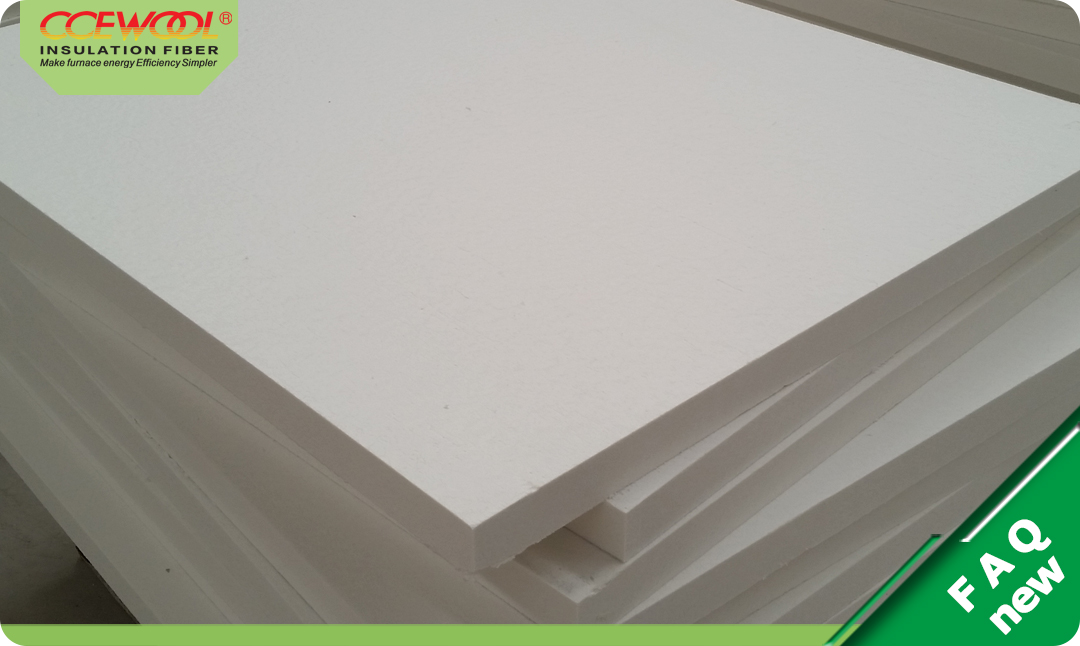
Why Does a Coke Oven Require Zoned Insulation Design?
Operating conditions vary considerably across different areas of a coke oven.
The carbonization chambers are continuously exposed to high temperatures, coal charging, and mechanical wear caused by coke pushing. The heating chambers continuously supply heat, while the regenerators recover waste heat. The oven roof is susceptible to heat loss, and the doors are opened frequently, creating demanding insulation and sealing requirements.
Ascension pipes, bridge pipes, and expansion joints are also continuously affected by thermal expansion and structural movement.
For this reason, coke oven insulation design should not use the same product throughout the entire structure. Materials should instead be selected according to the function and operating conditions of each area.
Ceramic fiber board is more suitable for areas requiring stable backup insulation, including:
- Oven roofs
- Heating chamber backup linings
- Regenerator exterior walls
- Oven doors
- Localized maintenance areas
Ceramic fiber blanket, rope, tape, and bulk are more suitable for:
- Flexible wrapping
- Gap filling
- Interface sealing
- Expansion compensation
- Irregular connection areas
A properly zoned design can provide a better balance between thermal insulation performance, structural stability, sealing reliability, and maintenance efficiency.
Oven Roof
Controlling Top-Surface Heat Loss and Insulating Openings
The coke oven roof contains coal charging holes, ascension pipes, observation openings, and maintenance access points. It is therefore one of the areas most susceptible to heat loss and sealing problems.
Because the roof is continuously exposed to high-temperature radiation while also requiring frequent operation and localized maintenance, an insufficient insulation structure can result in significant heat loss and increased thermal loading on the roof steelwork.
CCEWOOL® ceramic fiber board can be used for:
- Oven roof backup insulation
- Insulation around charging holes
- Insulation around observation openings
- Localized insulation near maintenance access points
Compared with loose-fiber materials, ceramic fiber board provides better dimensional and structural stability. It helps create a relatively continuous and even backup insulation layer across the oven roof, reduces outward heat transfer, and makes localized maintenance more convenient.
Heating Chamber Backup Lining
Reducing Heat Loss Through the Outer Furnace Wall
The heating chamber is the primary heat-generating area of a coke oven. Gas and air are combusted inside the chamber, producing high-temperature flames. Heat is then transferred through the refractory brick walls into the carbonization chambers.
Because the hot face of the heating chamber is continuously exposed to high-temperature combustion and thermal shock, the working lining should remain primarily constructed from refractory bricks.
Ceramic fiber board is not suitable for use as a hot-face lining in direct contact with flames.
However, in the outer backup insulation area of the heating chamber, ceramic fiber board can serve as a low-thermal-conductivity insulation layer to reduce heat transfer toward the exterior of the oven.
CCEWOOL® ceramic fiber board is lightweight, easy to fabricate, and has low thermal conductivity. It is therefore suitable for heating chamber backup insulation, helping to:
- Reduce heat loss through the outer wall
- Control shell temperature
- Improve long-term thermal efficiency
- Simplify localized maintenance and replacement
Regenerator
Improving Waste-Heat Recovery Efficiency
The regenerator is located in the lower section of the coke oven and is an essential part of the heat-recovery system.
As high-temperature flue gas passes through the regenerator, waste heat is stored in the checker bricks. After flow reversal, the incoming combustion air and gas are preheated, improving fuel utilization efficiency.
When the external insulation of the regenerator is insufficient, part of the recovered heat may escape to the surrounding environment. This reduces the preheating effectiveness of the air and gas and may increase fuel consumption.
CCEWOOL® ceramic fiber board is suitable for insulating the outer walls and backup areas of the regenerator.
It can form a stable insulation layer across relatively regular wall surfaces, reduce heat loss, and allow more recovered energy to be used for preheating combustion air and gas, thereby supporting more energy-efficient coke oven operation.
Oven Doors
Ceramic Fiber Board for Insulation and Flexible Products for Sealing
Coke oven doors are opened and closed frequently and require regular maintenance. During long-term operation, the door area is affected by:
- Thermal expansion
- Cooling contraction
- Mechanical vibration
- Seal wear
- Repeated maintenance work
For oven doors, temperature resistance alone is not sufficient. Thermal insulation performance, sealing reliability, and ease of maintenance are equally important.
Insufficient insulation or unstable sealing can lead to gas leakage, cold-air infiltration, and localized heat loss, affecting temperature stability within the coke oven.
CCEWOOL® ceramic fiber board is suitable for the main insulation layer or backup insulation layer of the oven door, helping reduce outward heat transfer.
CCEWOOL® ceramic fiber blanket, ceramic fiber rope, and ceramic fiber tape are more suitable for:
- Door edges
- Door-frame gaps
- Interface sealing
- Flexible compensation areas
Recommended Combination
Ceramic fiber board for insulation
+
Flexible ceramic fiber products for sealing
This combination provides a better balance between thermal efficiency, sealing reliability, and maintenance convenience.
Ascension Pipes, Bridge Pipes, and Observation Openings
Insulation and Sealing for Complex Interfaces
Ascension pipes, bridge pipes, temperature-measurement openings, and observation openings occupy relatively small areas, but they are closely associated with coke oven gas extraction, temperature monitoring, and routine maintenance.
These areas generally contain:
- Multiple interfaces
- Complex geometries
- Significant thermal expansion
- High sealing requirements
- Frequent inspection or maintenance points
Unreliable interface sealing may result in gas leakage, cold-air infiltration, or localized temperature fluctuations.
CCEWOOL® ceramic fiber board can be used in relatively flat surrounding areas, including locations near observation openings, maintenance access points, and localized supporting insulation structures.
For gaps, interfaces, and irregular connections, CCEWOOL® ceramic fiber rope, ceramic fiber tape, and ceramic fiber bulk are more suitable for filling, sealing, and thermal-expansion compensation.
Functional Division
Ceramic fiber board: insulation across flat surfaces
Flexible ceramic fiber products: sealing gaps and irregular interfaces
Only by combining the two can a more complete coke oven insulation and sealing structure be achieved.
Expansion Joints and Irregular Connections
Small Details That Affect Lining Service Life
Coke ovens operate continuously at high temperatures for extended periods. Different parts of the structure experience thermal expansion and movement as temperatures change.
Without sufficient compensation at expansion joints and irregular connections, internal stresses can accumulate within the lining and eventually cause:
- Cracking
- Detachment
- Localized damage
- Premature lining failure
- Shortened maintenance intervals
Although expansion joints occupy only a small proportion of the overall structure, they directly affect lining integrity and maintenance cycles.
CCEWOOL® ceramic fiber blanket, ceramic fiber bulk, and custom-shaped ceramic fiber parts can be used in these areas to absorb thermal expansion, fill gaps, and relieve structural stress.
Ceramic fiber board can be installed in the surrounding flat backup insulation areas to help maintain the stability of the localized insulation structure.
The Key to Coke Oven Optimization
Proper Material Allocation, Not an All-Fiber Lining
From an engineering perspective, coke oven optimization does not mean replacing the entire lining with ceramic fiber products.
Instead, materials must be properly allocated according to the operating conditions of each area.
The hot faces of the carbonization and heating chambers are continuously subjected to high temperatures, mechanical wear, and structural loads. These areas should therefore continue to use silica bricks and other refractory bricks as the primary working lining.
In areas such as the oven roof, heating chamber backup lining, regenerator exterior, oven door insulation, and localized maintenance zones, CCEWOOL® ceramic fiber board can provide the advantages of:
- Low thermal conductivity
- Lightweight construction
- Stable board structure
- Easy cutting and fabrication
- Convenient localized installation
- Improved maintenance efficiency
For oven door edges, ascension pipes, bridge pipes, observation openings, expansion joints, and irregular connections, ceramic fiber blanket, ceramic fiber rope, ceramic fiber tape, and ceramic fiber bulk should be used to provide flexible sealing and thermal-expansion compensation.
Recommended Zoned Lining Structure
Refractory Brick Working Lining
Provides high-temperature resistance, mechanical strength, wear resistance, and structural support.
Ceramic Fiber Board Backup Insulation
Reduces heat transfer, controls external surface temperature, and forms a stable backup insulation layer.
Flexible Ceramic Fiber Sealing Products
Fill gaps, seal interfaces, accommodate thermal movement, and reinforce irregular connection areas.
A More Complete Coke Oven Insulation Solution
The recommended zoned combination is:
Refractory brick working lining
Ceramic fiber board backup insulation
Flexible ceramic fiber sealing products
This approach can provide a better balance between:
Refractory performance · Thermal efficiency · Structural stability · Sealing reliability · Maintenance convenience
For large high-temperature equipment such as coke ovens that operate continuously over long periods, the performance of any single material is not the only consideration.
What truly matters is whether the selected products are properly matched to the furnace structure and the operating conditions of each zone.
Only an insulation and maintenance solution based on zoned operating requirements can deliver more stable, efficient, and long-term value in coke oven applications.
Post time: Jul-17-2026
