
Bell-type furnaces are typical intermittent heat treatment equipment with variable temperature profiles. They are widely used for bright annealing and heat treatment of workpieces. Their basic structure usually consists of a furnace base, an inner cover, and an outer cover, also known as the heating hood. The workpieces are placed on the furnace base, the inner cover forms a controlled atmosphere chamber, and the external heating hood provides the required heat. According to the loading method, bell-type furnaces are generally divided into square bell-type furnaces and round bell-type furnaces. Their process temperature is typically within the range of 650–1100°C and changes over time according to the specified heating program.
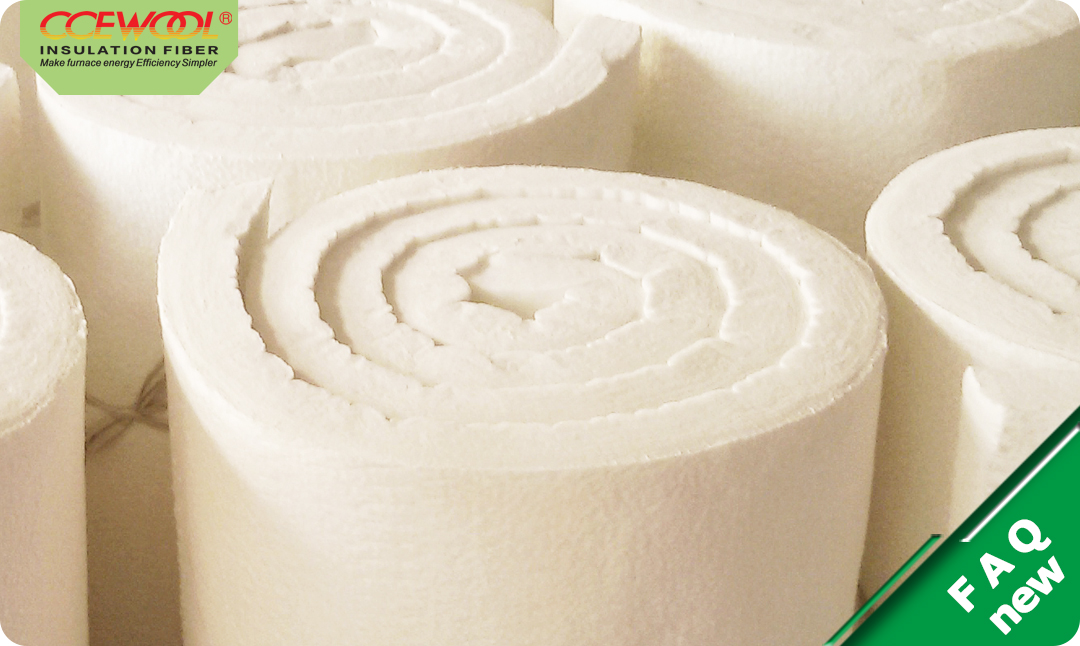
For bell-type furnaces, the focus of lining design is not only to meet temperature resistance requirements, but more importantly to achieve both lightweight heating hood construction and system energy efficiency. This is also why traditional lightweight brick or lightweight castable structures are gradually being replaced by lighter refractory ceramic fiber structures with lower heat storage. The core advantages of CCEWOOL® ceramic fiber blanket and related ceramic fiber products in bell-type furnace heating hoods come from their low thermal conductivity, low heat storage, and low bulk density.
Furnace Structure and Temperature Range: Why Bell-Type Furnaces Are More Suitable for Lightweight Ceramic Fiber Linings
The heat of a bell-type furnace is mainly supplied by the heating hood and then transferred to the workpieces through the inner cover. Therefore, the weight, heat storage, and insulation efficiency of the heating hood directly affect the thermal performance of the entire furnace system. Bell-type annealing furnace heating hoods can use gas heating or electric heating, while the furnace base, inner cover, and heating/cooling hood form the core structural components.
From the perspective of temperature distribution, although the overall process temperature of a bell-type furnace is usually 650–1100°C, the heat load varies in different areas. In actual applications, the burner zone is the area with the most concentrated heat load. The large hood area above the burner zone belongs to the secondary high-temperature zone, while the backup layer and cold-face area are exposed to relatively lower temperatures. Therefore, material configuration should be designed according to the heat load gradient of each area, rather than using one single temperature grade throughout the entire hood.
Burner Zone: Composite Structure of Ceramic Fiber Modules and Ceramic Fiber Blanket
In the heating hood of a bell-type furnace, the burner zone is one of the areas with the highest heat load and the most obvious gas flow erosion. Therefore, this area requires higher insulation performance, structural stability, and erosion resistance from the lining material.
For this area, CCEWOOL® recommends a composite structure of 1260°C ceramic fiber modules and ceramic fiber blanket. The modules are installed in a soldier-course arrangement, and the module structure can be selected as angle-iron modules or suspended modules according to the furnace type and installation method. The hot-face layer uses 1260°C CCEWOOL® ceramic fiber modules, while the backup layer uses 1260°C CCEWOOL® ceramic fiber blanket.
This configuration is better suited to the concentrated heat load conditions of the burner zone. It helps improve hot-face insulation performance and resistance to gas flow erosion, while also maintaining lining flatness and overall sealing performance. Compared with traditional heavy refractory structures, this composite lining can also effectively reduce the weight of the heating hood and lower the load on the steel structure.
Area Above the Burner Zone: Layered Refractory Ceramic Fiber Blanket for Large Hood Structures
For the large hood area above the burner zone, CCEWOOL® recommends a layered ceramic fiber blanket structure. This type of lining is usually installed with 6–9 layers and fixed with heat-resistant steel screws, speed clips, rotary clips, and other fasteners. To better match the temperature gradient in this area, the hot-face area of approximately 150 mm uses 1260°C CCEWOOL® refractory ceramic fiber blanket, while the remaining layers use 1100°C CCEWOOL® ceramic fiber backup blanket.
This layered configuration, with a higher-grade material at the hot face and a lower-grade material in the remaining layers, better matches the actual heat load of the large heating hood area. It provides sufficient temperature safety margin at the hot face while also balancing overall cost, weight control, and heat storage management.
In actual applications, this layered ceramic fiber blanket structure offers several clear advantages:
It can significantly reduce the weight of the heating hood and improve lightweight construction.
It lowers heat storage in the hood, reducing non-productive energy consumption during intermittent furnace operation.
The staggered joint installation of layered blankets helps improve overall sealing and insulation performance.
Product Grade Selection Logic: Graded Configuration by Heat Load, Not One Product for the Entire Furnace
CCEWOOL® refractory ceramic fiber products cover a complete temperature range from 1100°C to 1430°C, including bulk fiber, blanket, modules, board, shaped parts, paper, and textile products. This means that bell-type furnace lining design should not rely on one material for the entire hood. Instead, the material should be selected and configured according to the heat load, structural form, and installation requirements of different areas.
After a bell-type furnace heating hood adopts a full ceramic fiber lining structure, the application benefits are usually more obvious:
The overall weight of the heating hood is reduced, helping lower steel structure requirements and lifting demands.
Lower heat storage makes it more suitable for intermittent furnace operation and helps reduce fuel consumption during non-productive heating periods.
Installation becomes easier, as layered blankets and module structures are simple to install and can shorten construction time.
Overall insulation performance is improved, helping reduce heat loss from the outer hood and lower system energy consumption.
For bell-type furnaces, a truly valuable lining configuration is not only about meeting the 650–1100°C operating temperature requirement. It should be based on the structural characteristics of the furnace, with clear differentiation between the burner zone, the large hood area above the burner zone, and the backup area. By matching these areas with different temperature grades of CCEWOOL® refractory ceramic fiber blanket and ceramic fiber modules, the heating hood can achieve lightweight construction, easier installation, and improved system energy efficiency, better meeting the comprehensive requirements of modern heat treatment equipment for lining efficiency and structural performance.
Post time: May-22-2026
